How Incident Tracking Protocols Mitigate Mass Structural Losses
During peak severe weather conditions over central Ohio, water tables in dense clay layers expand simultaneously across hundreds of commercial and residential areas. To prevent structural failure vectors from causing permanent block masonry shifting, our data routing engine structures localized telemetry data to maximize dispatch speed. This systematic layout aligns logistics logs with real-time site constraints.
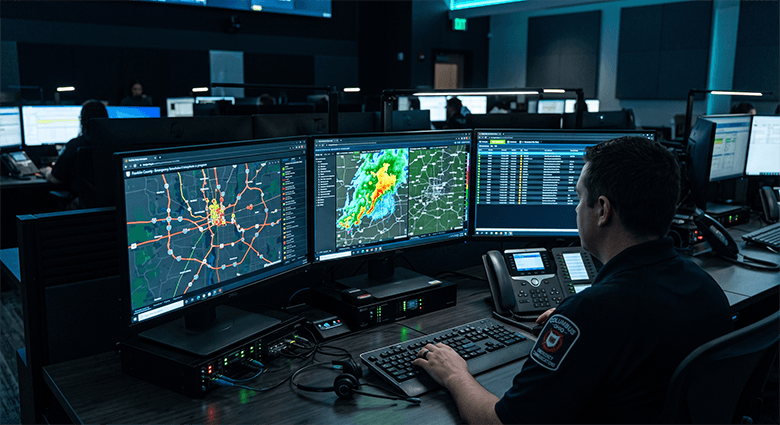 Figure 5.1: Central routing nodes monitor severe weather cells and coordinate proximity parameters for regional mobile units.
Submit Urgent Field Remediation Incident Data
If you are currently experiencing active sub-slab perimeter joint weeping, core cavity water collection, or foundation block wall dampness tracking, provide your property's diagnostic profile below to catalog the structural loss vectors for insurance claim records.
⚠️ WARNING: CRITICAL DELAY DETECTED
Due to extreme seasonal storm saturation across Columbus, the current queue time for processing manual text/email intake forms is **4 to 6 hours**.
If you have active groundwater leaking through your concrete blocks or slab joints, **waiting will result in permanent structural masonry damage and mold growth**. Your area currently has on-call emergency vehicles open for direct voice dispatch.
Comprehensive Psychrometric Tracking Requirements
Please remember that logging an incident report does not replace real-time structural stabilization. National property insurance groups closely audit water backups, frequently rejecting claims if drying logs show initial structural mitigation delays. Independent crews avoid these risks by preparing complete digital data folders right away. Technicians use advanced tablet interfaces to track precise atmospheric grains per pound (GPP) and verify structural dry standards for insurance claims adjusters.